
Find the best protective hairstyles for your texture, lifestyle, and comfort, with practical care tips for braids, wigs, twists, and low-tension looks.


A secure wig should help you feel like yourself, not leave you worrying about shifting, lifting, itching, or a difficult removal at the end of the day. When choosing wig glue versus wig grips, the best option depends on your skin, your natural hair, your daily routine, and the kind of hold you want. Both can create a polished, natural-looking result. They simply work in very different ways.
For some women, adhesive gives the confidence of a hairline that stays put through a long event or active day. For others, a soft grip band offers reliable security without applying anything directly to the skin. There is no single right answer – only the method that supports your comfort and confidence.
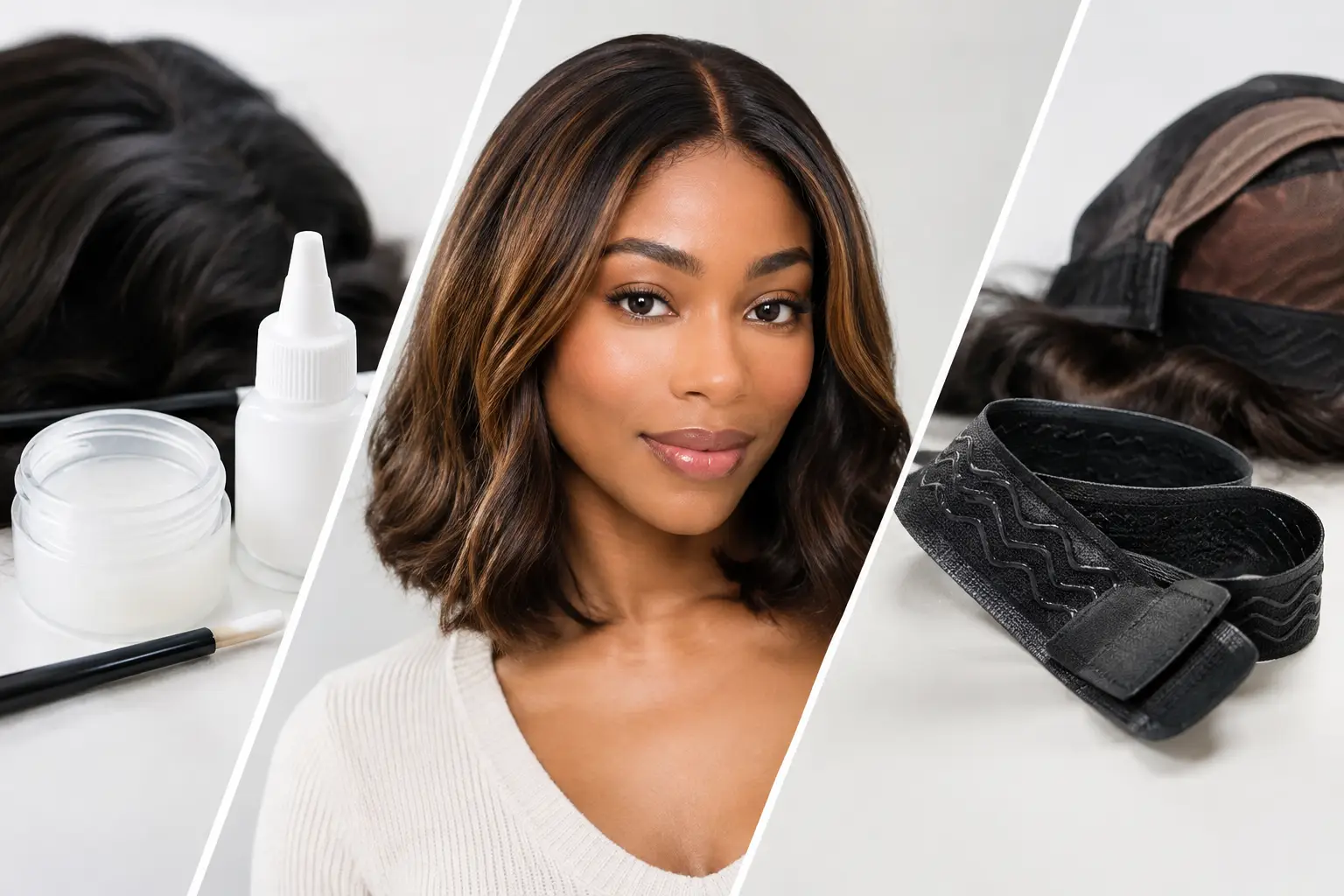
Wig glue is an adhesive applied along the hairline or perimeter of the scalp to hold a lace-front or full-lace wig in place. Depending on the product and application, the hold may last for a day, several days, or longer. It is often chosen when the goal is a very flat, blended hairline with minimal movement.
A wig grip is a soft band, usually made from velvet or silicone-backed material, worn underneath the wig. The band creates gentle friction between the scalp and the wig cap, helping prevent slipping. It does not require adhesive, and most grips can be put on and removed each day in minutes.
The difference is not just about security. Glue is a commitment to preparation, application, and removal. A grip is usually a simpler part of a daily getting-ready routine. Your choice should feel manageable, not intimidating.
Wig glue can be a beautiful option for someone who wants the most secure, close-to-the-scalp finish possible. It is especially useful for lace-front wigs where you want the front edge to appear nearly undetectable. A properly fitted wig, prepared skin, and careful adhesive application can create a convincing hairline that stays in place as you move.
Adhesive may be worth considering if you wear your wig for extended periods, attend special occasions, travel frequently, or want to style the hair away from your face. It can also help reduce the concern that a wig will shift in humidity, wind, or a busy day.
Still, stronger hold comes with more responsibility. The scalp needs to be clean and fully dry before application. Oils, sweat, makeup, and leftover adhesive can affect the bond. Removal should never be rushed or forced. Pulling a wig away from dried glue can irritate the skin, damage delicate lace, and pull on fragile natural hair around the edges.
If you have sensitive skin, a history of contact reactions, an irritated scalp, or active skin concerns, glue may not be your first choice. A patch test with a new adhesive is wise, even if you have used wig glue before. Formulas vary, and your skin can change over time. If you are experiencing hair loss or receiving medical care, ask your health professional whether scalp adhesive is appropriate for you.
A secure adhesive installation is not only about the glue itself. Your wig must fit correctly, the lace must be trimmed carefully, and the hairline should be positioned naturally. Too much glue can seep through lace or create buildup. Too little can cause lifting. For women who are new to lace wigs, professional fitting and application can make the learning process much less stressful.
A wig grip is often the most comfortable starting point for first-time wig wearers and anyone who wants a secure fit without adhesive. It is easy to use: place the band around the head, adjust it to sit comfortably, then position your wig over it. The grip helps anchor the cap while adding a light cushion between the wig and scalp.
This makes wig grips particularly helpful for daily wig wear. You can take the wig off at night, clean your scalp, care for your natural hair if you have it, and put everything back on the next morning. There is no adhesive residue to remove and no drying time before leaving the house.
Grips are also a practical choice for women with sensitive skin or thinning hair. Because the band holds the wig through friction rather than adhesive, it can reduce the need for tape or glue at the hairline. That said, the grip must not be too tight. Pressure, headaches, or tenderness are signs that the band needs adjustment or that a different size may be more comfortable.
A grip is not always the ideal solution for every cap construction. A very loose wig may still move if it has not been adjusted to fit your head. Some lace-front styles can also look less flat at the hairline with a thick band underneath. In those cases, an adjustable wig cap, discreet combs or clips, or a customized grip-band attachment may offer a better balance.
Many women try to solve wig movement by pulling the straps as tight as possible. This can create discomfort without truly improving the fit. The better approach is to start with the right cap size, then use a grip or other attachment method as support. A custom adjustment can make a meaningful difference, particularly if your wig has stretched over time or your head size has changed.
The most secure method is not automatically the best method if it makes you avoid wearing your wig. Think honestly about how you live in it. Do you want to remove it every evening? Do you exercise, spend time in humid weather, or need a look that stays polished for a special event? Are you comfortable maintaining adhesive, or do you prefer an easy daily routine?
Wig glue may suit a woman who wants a long-wear installation and enjoys the smooth appearance of a bonded lace hairline. Wig grips may suit someone who wants flexibility, easy removal, and less contact with the scalp. Many experienced wig wearers use both depending on the occasion. They may choose a grip for workdays and errands, then use adhesive for a wedding, vacation, photo shoot, or event where they want maximum hold.
For women experiencing hair thinning or hair loss, comfort deserves extra attention. Avoid relying on clips or combs if they pull on delicate areas. A lightweight, properly sized wig with a soft grip band can be gentler than a heavy cap or tight attachments. A private consultation can help identify a cap construction, grip placement, or custom solution that feels secure without creating pressure where your scalp is most sensitive.
Glue requires consistent cleanup. Remove adhesive gently with a product made for wig adhesive removal, then cleanse the skin before your next installation. Lace should also be cleaned carefully so old residue does not make the wig look dull or affect future applications. Never use heat or harsh solvents on a wig without confirming they are suitable for its fiber and cap construction.
Wig grips need cleaning, too. Oils from the scalp, skincare, and sweat can reduce their grip over time. Hand wash the band according to its material instructions and let it air dry completely. If the band has stretched, lost its texture, or no longer sits comfortably, replace it rather than over-tightening it.
Your wig itself also needs regular attention. Whether it is human hair or synthetic fiber, a clean cap, smooth interior, and properly adjusted straps make any attachment method work better. At Hair A La Mode, wig services can include fit adjustments, cap repair, clip or comb replacement, and wig-grip-band attachment when a ready-to-wear solution needs a more personal fit.
Choose wig glue if your priority is a bonded, low-movement hairline and you are comfortable with careful application and removal. Choose a wig grip if you value an easy daily routine, want to avoid adhesive on your scalp, or prefer to remove your wig at night. If you are unsure, start with a grip. It is usually easier to add adhesive later than to manage an uncomfortable adhesive routine from the beginning.
The right attachment method should give you freedom: freedom to turn your head, smile for photos, step outside, and focus on your day instead of your wig. A secure fit is personal, and the best one is the one that lets your style feel natural from morning to night.
Find the best protective hairstyles for your texture, lifestyle, and comfort, with practical care tips for braids, wigs, twists, and low-tension looks.

Learn how to remove wig adhesive gently, protect your skin and hairline, and clean your lace wig for a comfortable, confident next wear at...

Do wigs cause headaches? Learn how fit, pressure, heat, and styling affect comfort, with practical ways to wear your wig pain-free every day with...
