
Learn how to fix wig frizz safely with simple care steps for synthetic and human hair wigs, plus signs it is time for a...


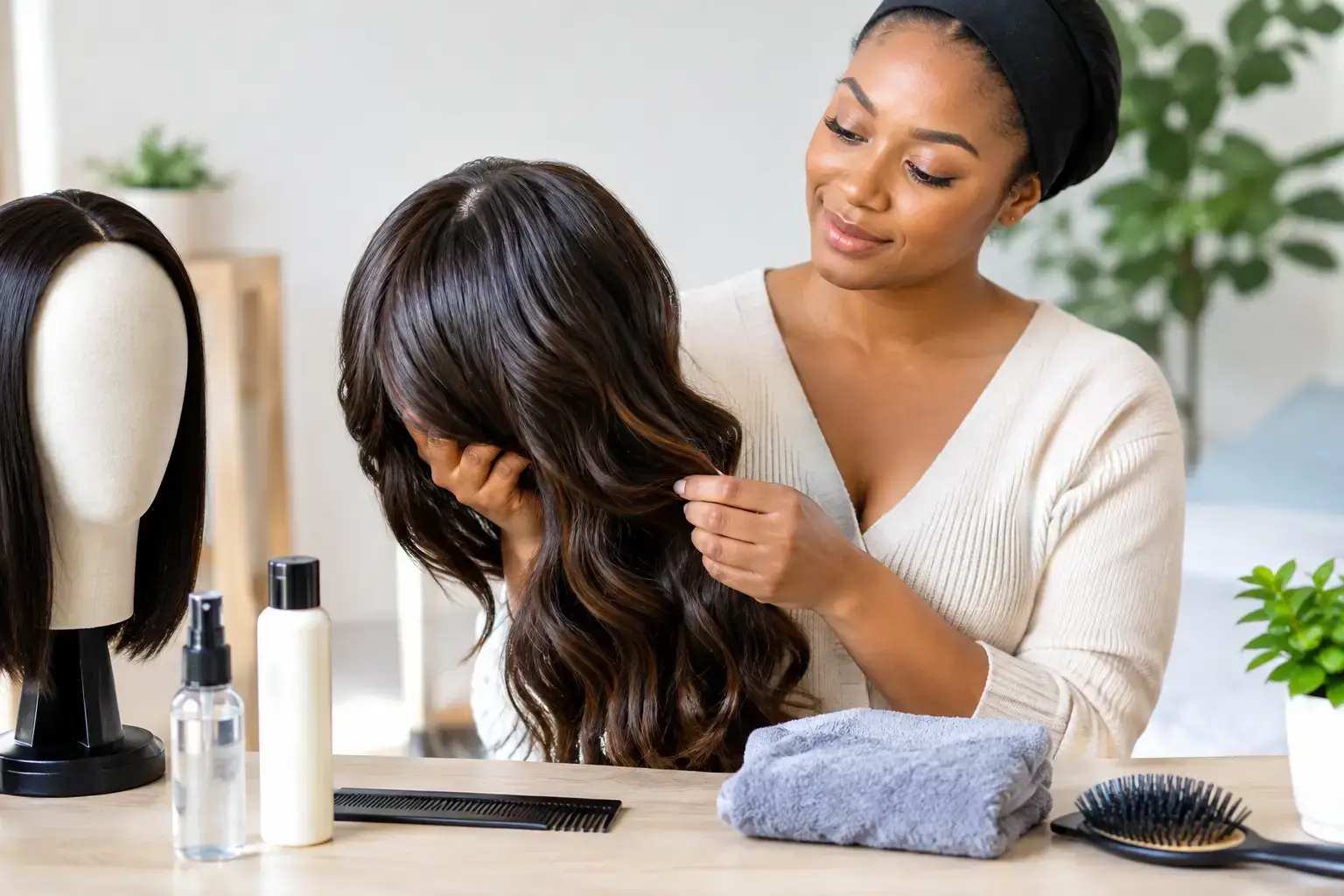
A synthetic wig can look beautifully polished straight out of the box, but its finish depends on how it is handled between wears. Thoughtful synthetic wig care protects the fibers, preserves the style, and helps your wig feel like a comfortable, confidence-building part of your routine – whether you wear it every day or reserve it for special occasions.
Synthetic hair is not treated like natural hair. The fibers hold their shape well, which makes styling easier, but they can be damaged by heat, friction, and products not made for wigs. A few gentle habits will make a noticeable difference in how long your wig stays soft, natural-looking, and ready to wear.
Before putting on your wig, make sure your natural hair is smooth and secure underneath. A wig cap can help create a more even surface, especially if you have longer hair, but comfort matters most. Your wig should sit securely without feeling tight or causing pressure around the hairline.
After each wear, give the wig a quick check before placing it away. Gently separate any tangles at the nape, behind the ears, and around the front hairline. These areas experience the most friction from clothing, skin, and movement, so they are often the first places where synthetic fibers begin to look dry or matted.
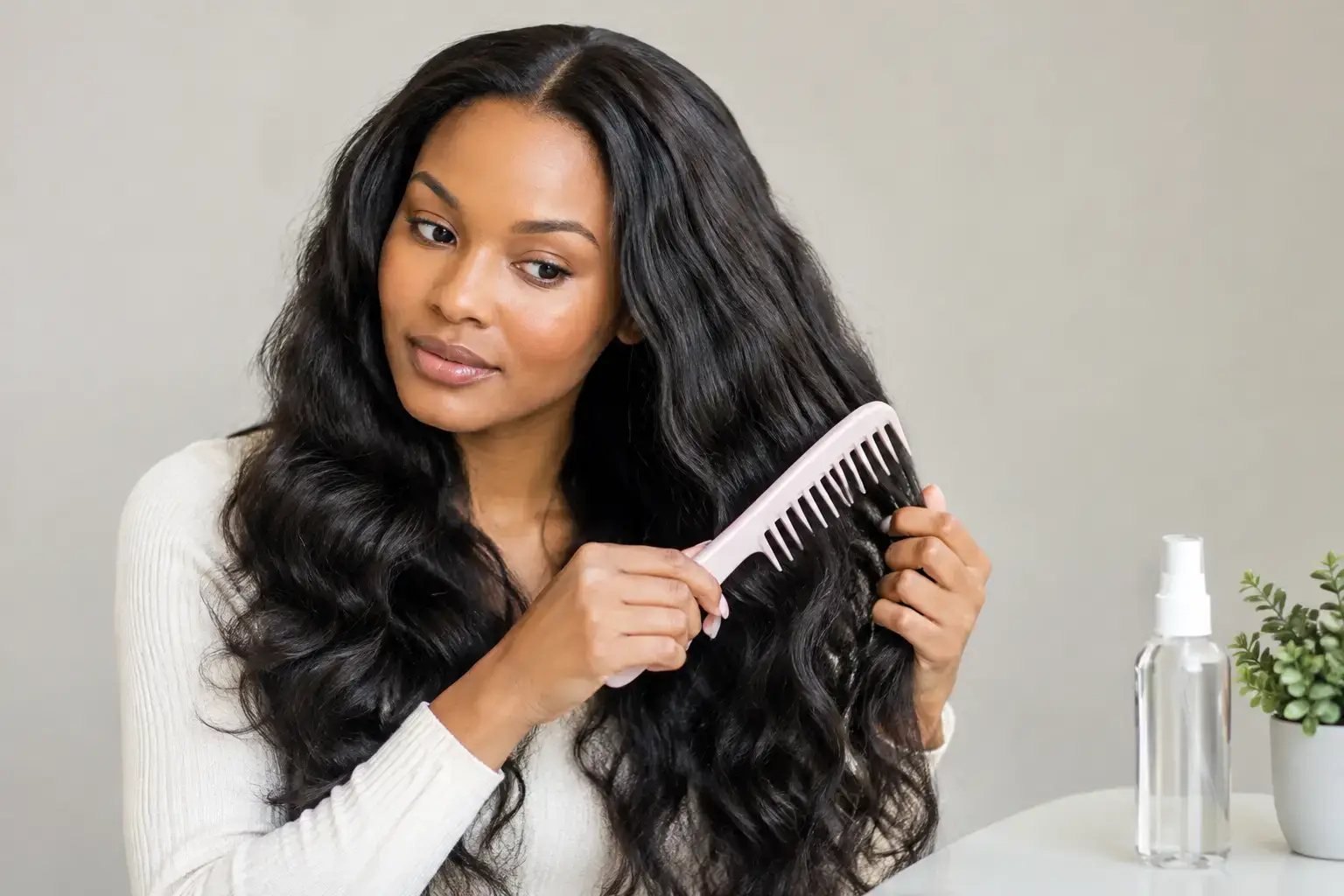
Use a wide-tooth comb or a wig brush designed specifically for synthetic hair. Begin at the ends and work upward in small sections. Pulling from the roots can stretch the fibers and loosen hand-tied details, clips, or other cap components. If a knot resists, pause and use a small amount of synthetic wig detangling spray rather than forcing it apart.
Do not brush curls aggressively. For curly or wavy styles, use your fingers or a wide-tooth comb to reshape the hair gently. Brushing tight curls can turn a defined style into unwanted frizz very quickly.
Most synthetic wigs do not need to be washed after every wear. For occasional wear, washing after about six to eight wears is often enough. If you wear your wig daily, live in a humid climate, use styling products, or perspire more around the scalp, you may need to wash it sooner.
The clearest sign is how the wig feels and moves. When fibers become stiff, look dull, tangle more easily, or carry a noticeable odor, it is time for a gentle wash. Washing too frequently can shorten the life of the fibers, so avoid treating your wig like your natural hair.
Fill a clean basin with cool water, then add a small amount of shampoo made for synthetic wigs. Avoid regular shampoo, clarifying shampoo, and sulfate-heavy formulas. They can strip the fiber coating and leave the hair rough or dry.
Submerge the wig and let it soak for a few minutes. Swish it lightly through the water, but do not rub, scrub, twist, or bunch the hair. Pay attention to the cap, where makeup, perspiration, and oils can collect. Rinse thoroughly in cool water until no shampoo remains.
Apply a synthetic wig conditioner or conditioning spray if appropriate for the product instructions. Keep heavy conditioner away from the roots and cap, where buildup can make the wig feel weighed down. Rinse as directed, then lightly blot the wig with a towel. Never wring it out.
Place your wig on a wig stand after washing so air can move through the cap and the style can return to its intended shape. Keep it away from direct sunlight, radiators, and forced heat. A warm bathroom, sunny windowsill, or the top of a dryer may seem harmless, but high temperatures can permanently damage synthetic fibers.
Allow the wig to air-dry completely before combing, wearing, or storing it. If the style has waves or curls, arrange them with your fingers while the wig is damp, then let the fibers dry naturally. This helps the texture settle without unnecessary manipulation.
A wig stand is helpful, but it should match the wig’s approximate head size. A stand that is too wide can stretch the cap over time. For storage and travel, a breathable wig box or clean bag can be a better choice.
Not every synthetic wig is heat-friendly. Standard synthetic fibers can melt, frizz, or become permanently distorted when exposed to curling irons, flat irons, blow dryers, steam, hot rollers, and even oven-like heat from an open dishwasher. Always check the wig label or product details before using any heated tool.
Heat-friendly synthetic wigs offer more styling flexibility, but they still require caution. Use the lowest temperature recommended by the manufacturer and test a small, hidden section first. Heat should be applied slowly and deliberately, not repeatedly. Multiple passes with a hot tool can shorten the life of even heat-resistant fibers.
Be careful around heat sources you may not think about. Opening a hot oven, leaning close to a grill, or standing near a space heater can affect the front layers of a wig. Nape friction can also create roughness over time, particularly with longer styles that rub against collars, scarves, or seat backs.
If your wig needs a new shape, trim, bang adjustment, or more polished finish, professional styling is usually the safest option. A stylist experienced with synthetic hair can work with the fiber type, cap construction, and original style rather than guessing with tools or products at home.
Synthetic wigs respond best to products formulated for synthetic hair. A light detangling mist, fiber-safe conditioning spray, and wig-specific shampoo are usually enough for routine maintenance. Less is often more. Too much product can cause buildup, make the fibers feel sticky, and attract lint.
Avoid conventional hairspray, mousse, dry shampoo, oils, heavy serums, and alcohol-heavy styling products unless they are specifically labeled safe for synthetic wigs. Natural-hair products are designed to absorb into hair or the scalp. Synthetic fibers cannot absorb them in the same way, so residue tends to sit on the surface.
If your wig has a lace front, use makeup and adhesive carefully. Remove residue from the lace gently and avoid saturating the hairline with product. If adhesive buildup, cap damage, or loosened clips become an issue, it is better to have the piece assessed than to attempt a harsh cleaning method that could cause more damage.
Proper storage prevents tangles, dust, flattening, and accidental heat exposure. For a short wig or a style you wear often, a wig stand is convenient. For long wigs, consider loosely gathering the lengths behind the stand to reduce friction and keep the ends from dragging.
If you are storing a wig for longer than a few days, make sure it is fully dry and free of product buildup. Then place it in a clean box or breathable bag away from humidity, direct sunlight, pets, and crowded drawers. Do not stack items on top of it.
Traveling with a wig? Brush it gently, place a hair net over the style if you have one, and pack it in a structured wig box or roomy bag. Crushing a wig into a small suitcase can flatten the crown and create tangles that take time to correct.
Some wear is normal, especially at the nape and ends. But persistent matting, a stretched cap, loose combs, damaged lace, or a style that no longer sits comfortably may call for professional wig care. Depending on the construction and condition, a wig can sometimes be refreshed with a careful wash, restyle, cap repair, clip replacement, or wig-grip-band attachment.
A private consultation can also be helpful if you are new to wigs or unsure whether your current piece fits properly. The right fit affects more than appearance. It influences comfort, security, and how naturally the wig moves throughout the day.
Your wig is meant to support your style, not create extra stress. With gentle care and the right professional help when needed, it can remain a reliable part of the look that helps you feel comfortable, polished, and fully yourself.
Learn how to fix wig frizz safely with simple care steps for synthetic and human hair wigs, plus signs it is time for a...

Protective style trends favor lighter tension, flexible wear, and natural finishes. Find a comfortable look that supports hair health and daily confidence.

Get hair coloring guidance for rich, natural-looking results, from shade selection and gray coverage to gentle care for wigs, extensions, and your hair.
