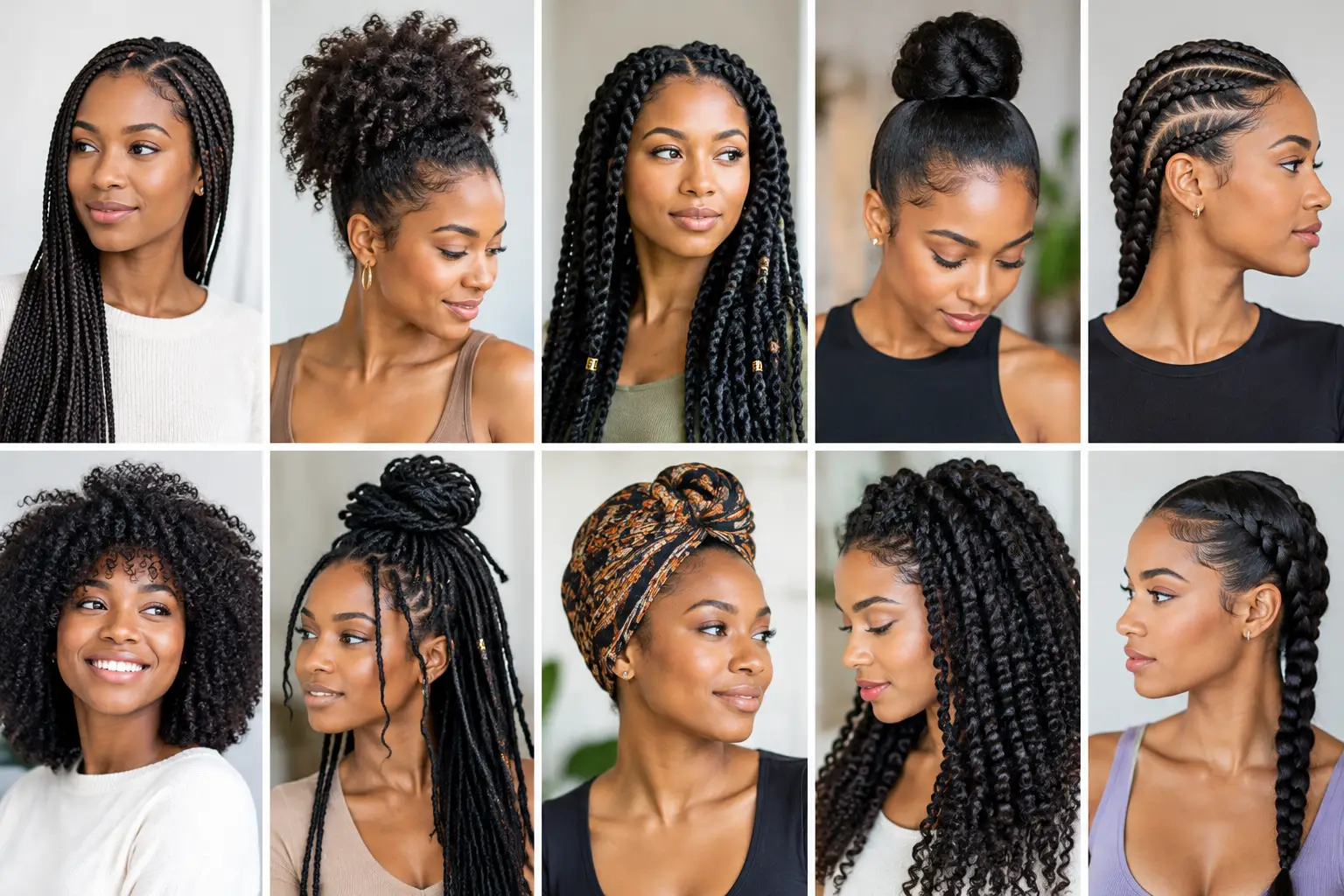

Find the best protective hairstyles for your texture, lifestyle, and comfort, with practical care tips for braids, wigs, twists, and low-tension looks.


A bandfall wig can give you the polished look of a finished style without the time, tension, or commitment of a traditional install. If you are learning how to style a bandfall wig, start with comfort and placement. When the band sits securely and the hair blends naturally around your face, even a simple style can feel beautifully put together.
Bandfall wigs are especially helpful for busy mornings, protective styling, thinning areas, or days when you want more fullness with less effort. The key is not to overwork the hair. A few intentional steps will help your wig look soft, secure, and like it belongs to you.
Before styling, make sure your natural hair is smooth and comfortably contained. You do not need a perfectly flat base, but bulky braids, loose twists, or a high bun can make the wig sit unevenly. Low, flat braids or a low twist usually create the most natural foundation.
If you have little or no hair underneath, a soft wig cap may help absorb moisture and reduce friction. Choose a cap that feels breathable and does not create pressure around your temples. Comfort matters just as much as appearance, particularly if you plan to wear your bandfall wig all day.
Place the wig at your natural hairline or slightly behind it, depending on the design and the amount of leave-out you prefer. Position the attached band so it feels snug but never tight. If your wig includes clips or combs, use them gently. They should support the fit, not pull on delicate hair or sensitive areas.
Once the wig is in place, take a moment to check the balance. The hair should sit evenly on both sides, and the band should be level across the top of your head. A crooked placement can make even the best cut or curl pattern look less natural.
The easiest way to style a bandfall wig is to work with its original texture. Curly styles look best when you define and separate the curls rather than brushing them out. Straight styles benefit from a light brushing and a small amount of smoothing product on the mid-lengths and ends. Wavy textures often need only a gentle finger-comb for movement.
Always begin at the ends and work upward. This simple habit prevents unnecessary shedding and keeps tangles from becoming knots. Use a wide-tooth comb for curls and waves, or a soft wig brush for straight hair. Avoid pulling through the hair in one forceful motion.
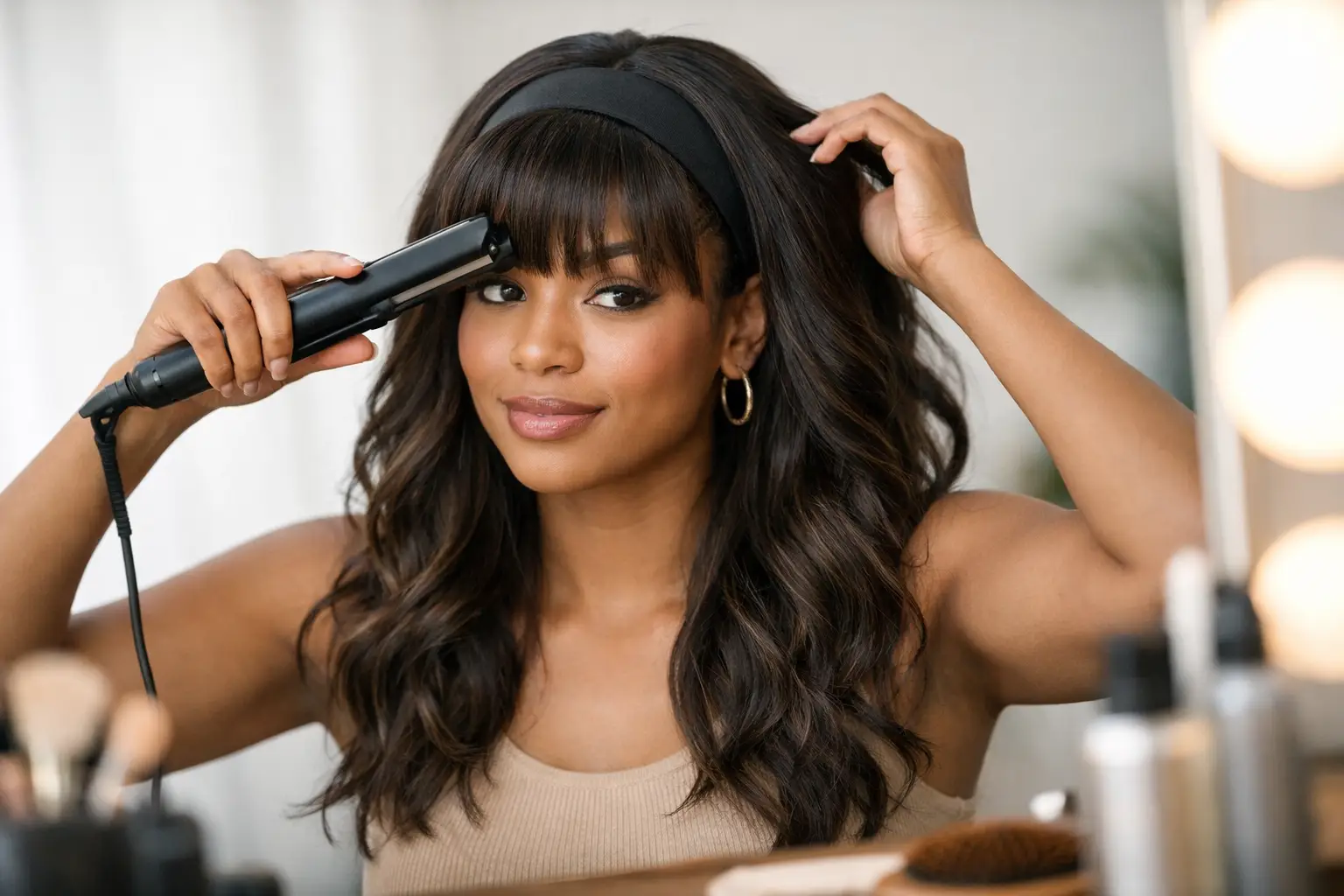
For a natural finish, style around your face first. Use your fingers to arrange the front pieces so they soften your features and do not fall heavily over your eyes. If you are leaving out a small amount of your own hair, blend it gently with the wig hair. A light pass with a warm tool may help only when both your natural hair and the wig fiber are heat-safe.
Do not assume every wig can handle heat. Human-hair bandfall wigs can often be curled, waved, or straightened with heat protectant and controlled temperatures. Synthetic wigs require more caution. Standard synthetic fiber may melt or become permanently damaged with hot tools, while heat-friendly synthetic hair still needs a low setting and a strand test first.
A flat crown can make a wig look less natural, especially on straight or loose-wave styles. Instead of teasing aggressively, lift small sections near the crown with a comb or your fingertips. A little root lift is usually enough.
If your bandfall wig has a defined part, keep it clean and intentional. If it is designed for flexible parting, try shifting the hair slightly to one side for a softer, less uniform result. The best part is the one that complements your face shape and feels comfortable with the wig’s construction.
Too much product can weigh down fibers, make synthetic hair look dull, or cause buildup at the band and cap. Use a small amount of wig-safe serum or smoothing spray, focusing on dry ends and areas prone to frizz. For curls, a light mist of water or curl refresher can bring back shape without making the hair stiff.
Avoid applying heavy oils directly to the cap, band, clips, or combs. Product buildup can affect the fit over time and may make the wig harder to clean properly.
A bandfall wig is versatile because the built-in band creates a polished base without requiring lace adhesive or complicated blending. The right style depends on the wig length, texture, and where the band sits.
For an easy everyday look, wear the hair down with a soft side part. Tuck one side behind your ear only if the wig feels secure and the band remains covered or intentionally visible. This style works well for straight, wavy, and loose-curly textures.
A low ponytail can look refined and comfortable when the wig is long enough. Gather the hair loosely at the nape and use a snag-free elastic. Leave a few soft pieces around the face if that suits the cut. Do not pull the ponytail too tightly, since tension can shift the cap or strain the wig fibers.
Half-up styles are another beautiful option. Take a small section from each side, secure it at the back, and allow the remaining hair to fall naturally. This creates shape around the face while keeping the wig’s fullness visible. For curly textures, use your fingers rather than a brush to preserve the curl pattern.
If your band is designed to show, treat it as part of the look. A wide fabric band can create a casual, sporty, or elegant finish depending on the color and texture. If you prefer a more discreet appearance, arrange the front hair and any natural leave-out so the transition looks soft, never forced.
The most natural-looking wig is not always the one styled exactly as it came out of the box. Small adjustments can make a significant difference. If the length overwhelms your face, a professional trim or face-framing layers may give the wig more movement. If the ends look too blunt, soft texturizing can create a lighter finish.
Be careful with permanent changes, especially if you are styling a new wig for the first time. Try changing the part, tucking one side, or creating a half-up style before cutting. Once hair is removed, it cannot be put back.
For human-hair wigs, salon styling can offer more flexibility with blowouts, curls, color adjustments, and customized shaping. Synthetic wigs can also be refreshed and restyled, but they need techniques designed specifically for synthetic fiber. A professional wig consultation is especially worthwhile if you need cap adjustments, repair work, or a style that supports hair loss or sensitive scalp concerns.
A bandfall wig stays easier to style when it is stored properly. After removing it, gently detangle the hair and place it on a wig stand when possible. This helps preserve the shape, reduces tangling, and allows the cap to air out.
Wash only when the wig has visible product buildup, feels less fresh, or no longer moves naturally. Overwashing can shorten the life of both human and synthetic hair. Use products made for the fiber type, rinse carefully, and let the wig dry fully before wearing or storing it.
Pay attention to the band, clips, and combs as part of your regular care. If the elastic becomes loose, the clips feel uncomfortable, or the cap no longer fits as it should, do not keep forcing it to work. Professional wig repair or fitting adjustments can restore comfort and extend the life of a favorite piece.
A bandfall wig should make getting ready feel easier, not more stressful. Give yourself permission to try different parts, soft updos, and textures until the style feels like your own. When the fit is comfortable and the hair moves naturally, your confidence does the rest.
Find the best protective hairstyles for your texture, lifestyle, and comfort, with practical care tips for braids, wigs, twists, and low-tension looks.

Learn how to remove wig adhesive gently, protect your skin and hairline, and clean your lace wig for a comfortable, confident next wear at...

Do wigs cause headaches? Learn how fit, pressure, heat, and styling affect comfort, with practical ways to wear your wig pain-free every day with...
