
Find the best protective hairstyles for your texture, lifestyle, and comfort, with practical care tips for braids, wigs, twists, and low-tension looks.


A wig can have beautiful hair and still not feel quite right if the cap does not move, part, or sit naturally. Hand tied wig ventilation is the detailed work behind many of the most realistic wigs and hairpieces. It gives individual hairs a natural-looking direction, softer movement, and a finish that can feel far more personal than a standard machine-made cap.
For anyone managing thinning hair, hair loss, or a changing style, those details matter. A well-ventilated wig is not simply about appearance. It can affect comfort, confidence, styling options, and how easily the piece becomes part of your everyday routine.
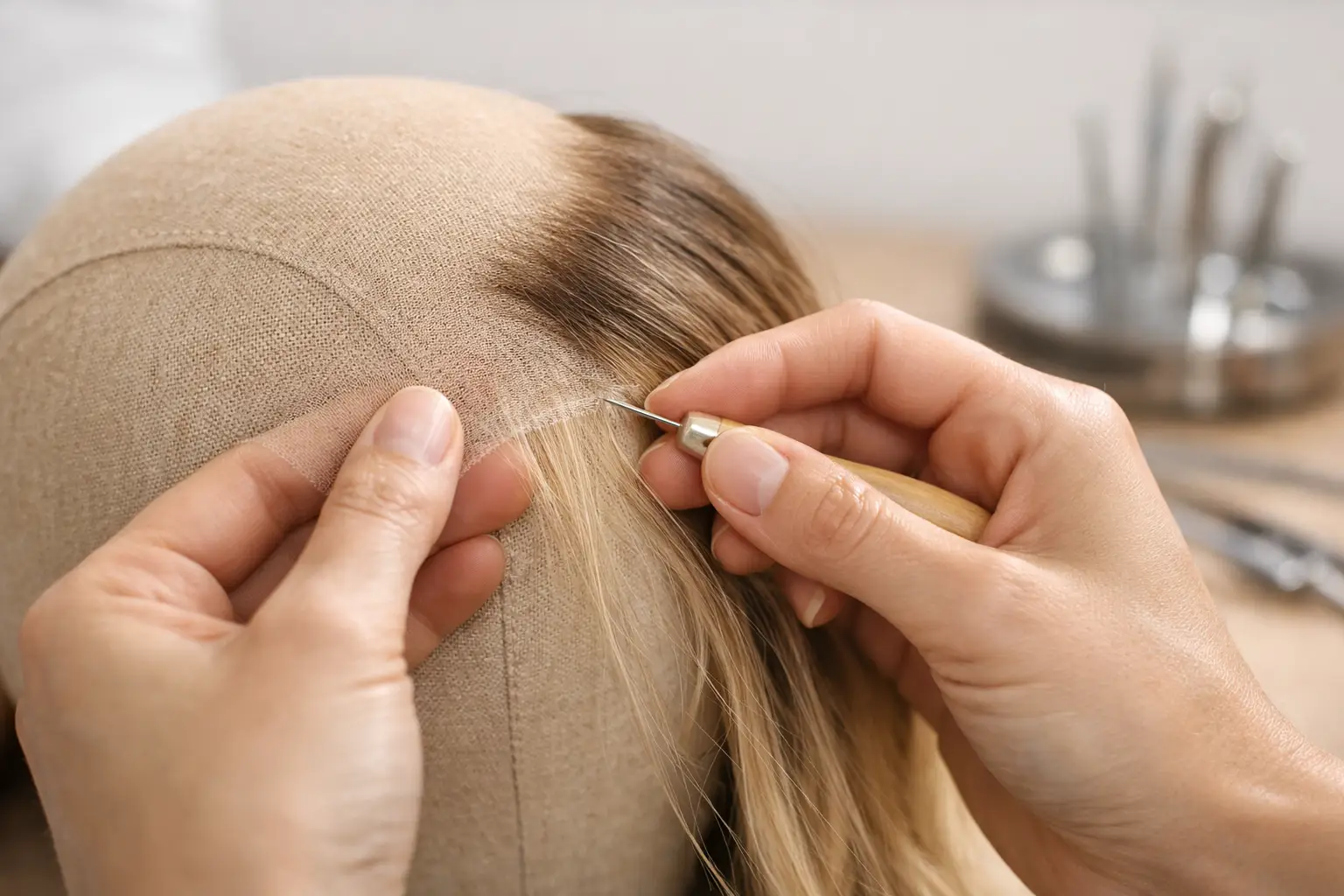
Ventilation is the process of attaching hair to a wig base or cap by hand. A trained wig technician uses a small ventilating needle to pull one or more strands through the cap material and secure them with tiny knots. The work is performed hair by hair, section by section, following a planned pattern of density, direction, and hair length.
With hand tied wig ventilation, the hair is not stitched onto a weft and then sewn into the cap. Instead, each knot is placed directly into a lace, mesh, or other foundation material. This gives the hair greater freedom to move and makes it possible to create a more believable scalp effect, especially around the part, crown, and hairline.
The process is highly detailed. A natural result depends on more than simply filling a cap with hair. The technician considers where your hair would normally grow forward, backward, or diagonally; how much density is appropriate; and where a softer transition is needed. Too much hair at the front can look heavy. Too little density in the wrong area can expose the cap or make the piece harder to style.
A hand-tied construction can give a wig a lighter, more responsive feel because the hair moves individually rather than in larger sewn sections. When you turn your head, tuck hair behind your ear, or change the part, the result can look less fixed in place.
The difference is especially noticeable in areas people see up close. A carefully ventilated top can make a center or side part appear more natural. A properly graduated hairline can avoid the blunt, uniform edge that often gives away an overly dense wig. For customers who wear their hairpiece every day, these details can make getting ready feel easier and more comfortable.
Ventilation also supports customization. A wig can be ventilated for a specific part placement, a directional style, or a more open front that works with a preferred hairstyle. Some clients want fullness through the crown. Others need gentle coverage in a thinner area while keeping the overall density soft and age-appropriate. The best choice depends on your goals, your lifestyle, and the cap type.
That said, hand-tied does not automatically mean better for every wearer. It often costs more because of the time and skill involved. Fine lace and delicate hand-tied areas may also need gentler handling than a more durable wefted cap. If you need a wig for frequent high-impact activity or want a lower-maintenance fashion option, a machine-made construction may be the practical fit.
The front hairline is where precise ventilation makes one of the biggest visual differences. Instead of a dense, straight line of hair, the technician can use lighter density and carefully varied placement to mimic the way natural hair emerges from the scalp.
This is not just about having a lace front. A lace front needs the right knotting, hair direction, and density to look convincing. The hair near the face may be ventilated in a forward direction so it can be styled back or swept to the side without revealing an unnatural transition.
A ventilated top allows the hair to fall more naturally from the scalp area. It can also make parting more flexible, depending on the cap design. For someone experiencing thinning at the crown or top of the head, this can create soft coverage without the appearance of an overly thick, helmet-like style.
A custom top should be designed around the way you intend to wear it. If you always part on the left, the ventilation pattern can support that direction. If you want the freedom to switch between a middle and side part, a larger hand-tied or lace top may be worth considering.
Even a high-quality wig can develop thin spots over time. Friction, frequent styling, brushing, heat exposure, and daily wear may cause hair to shed from certain areas. A worn hairline, a thinning crown, or a small gap in a lace top does not always mean the entire wig needs to be replaced.
Hand tied wig ventilation can be used as a repair service to add hair back into selected areas. The goal is to restore coverage while matching the existing hair color, texture, curl pattern, and density as closely as possible. Repair is often a smart option when the cap is still in good condition and the wig remains comfortable and well fitted.
Before any custom work begins, it helps to look closely at the wig itself and at how you want it to perform. The cap material, condition of the base, hair fiber, and existing construction all affect what can be done safely.
Human hair wigs offer the widest styling flexibility and can often be colored, cut, or heat styled with professional care. Synthetic wigs can also be repaired and ventilated in some cases, but their fiber type, heat tolerance, and available matching hair must be considered. A repair that looks beautiful in the salon should still be appropriate for the piece’s long-term wear.
During a private consultation, useful details include where you feel the wig looks sparse, whether you want more coverage or a softer look, and how you normally style it. Bringing the wig in person is the most reliable way to assess the cap and discuss realistic options. At Hair A La Mode, technical wig services can include hand-tied top ventilation, cap repair, and replacement of clips, combs, or wig-grip bands when the piece needs a more secure, comfortable fit.
Hand-ventilated areas deserve a gentler routine, particularly around lace fronts and tops. Avoid pulling hard at the hairline when putting the wig on or taking it off. Instead, release adhesives carefully and support the cap with your fingers as you lift it away.
Brush from the ends upward, working through small tangles rather than forcing a brush from root to tip. Use products that suit the fiber type, and avoid applying heavy oils or sprays directly onto knots and lace. Product buildup can make hair look dull and may weaken delicate cap areas over time.
Heat styling should be approached with care. Human hair wigs can often tolerate heat when the temperature and tools are appropriate, but repeated high heat can dry the hair and shorten its lifespan. Many synthetic fibers can melt or become permanently misshapen under standard hot tools unless they are specifically labeled heat friendly.
Storage matters, too. Place the wig on a stand when possible, keeping it away from direct sunlight, excessive heat, and areas where it can be crushed or tangled. A little routine care protects the work that went into every ventilated section.
Repair is a strong option when thinning is limited to one or two areas, the cap still fits well, and the hair quality remains good. Adding ventilation at the top or front can extend the life of a favorite piece and restore the confidence you felt when you first wore it.
Replacement may make more sense if the cap has become brittle, stretched beyond adjustment, torn across several areas, or uncomfortable against the scalp. It may also be time for a new piece when the hair is severely dry, matted, or no longer matches your preferred color and style. An honest assessment helps you invest in the solution that will serve you best, rather than spending on repairs that cannot provide a lasting result.
The right wig should never make you feel like you have to hide. Whether you are restoring a cherished piece or planning a completely custom design, thoughtful ventilation can help your hair move with you, feel comfortable on your scalp, and reflect the look you want to see in the mirror.
Find the best protective hairstyles for your texture, lifestyle, and comfort, with practical care tips for braids, wigs, twists, and low-tension looks.

Learn how to remove wig adhesive gently, protect your skin and hairline, and clean your lace wig for a comfortable, confident next wear at...

Do wigs cause headaches? Learn how fit, pressure, heat, and styling affect comfort, with practical ways to wear your wig pain-free every day with...
