
Find the best protective hairstyles for your texture, lifestyle, and comfort, with practical care tips for braids, wigs, twists, and low-tension looks.


A fuller hairstyle can change how you feel when you catch your reflection, but the right solution depends on what you want to change. When deciding on a wig topper versus extensions, start with the area that needs support: the crown and part line, the lengths, or both. A topper is designed to cover and blend with thinning hair on top. Extensions are designed to add density, length, texture, or color through the mid-lengths and ends.
Neither choice is automatically better. The most natural-looking, comfortable option is the one that respects your current hair density, lifestyle, and styling routine. If your hair has been feeling finer, damaged, or difficult to style, a private consultation can make the decision much less overwhelming.
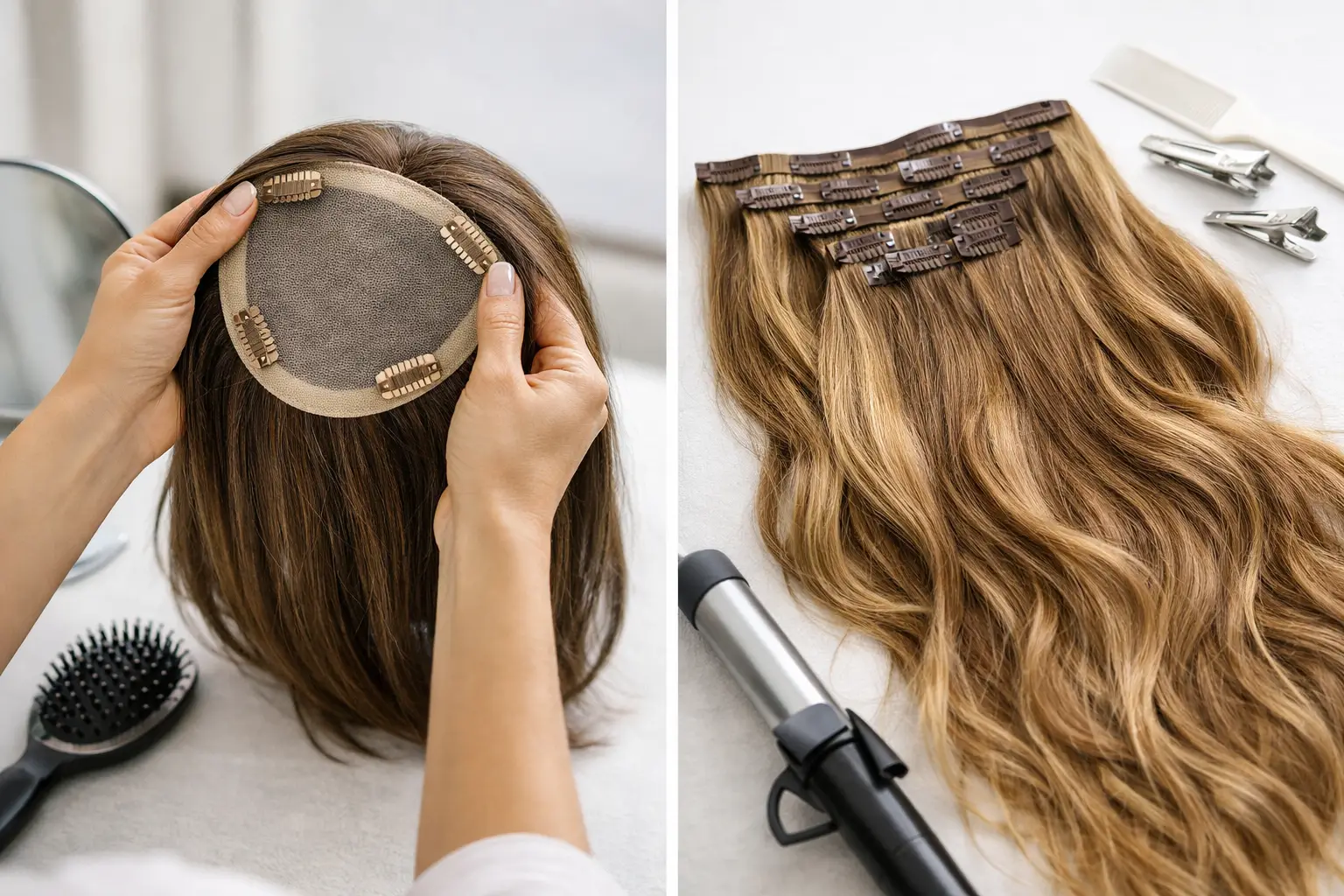
A wig topper is a partial hairpiece that sits over a specific area of the head, usually the crown, top, or part line. It blends with the hair around the perimeter, providing coverage where scalp visibility or thinning is most noticeable. Toppers come in different base sizes, lengths, colors, fiber types, and attachment methods. Some use pressure-sensitive clips, while others can be customized with more secure features for comfort.
Extensions attach to your existing hair to create more length or fullness. Depending on the method, they may be clipped in for occasional wear, taped in, bonded, sewn in, or attached with beads. They do not cover the scalp or replace hair at the crown. Instead, they build volume through the lower sections of your natural hair.
Think of a topper as targeted coverage and extensions as added hair density. A topper can make a widening part look fuller. Extensions can make a short bob feel longer and more glamorous. For some clients, a topper and extensions work beautifully together when thinning at the top and lack of fullness through the ends are both concerns.
A topper is often the more practical choice if your concern begins at the scalp. Maybe you see more scalp at your part, your crown falls flat by midday, or your ponytail has become noticeably smaller. Extensions may make the ends look fuller, but they will not conceal thinning where it is happening.
The right topper should match your density, texture, and color, then be cut and styled to blend into your own hair. That blending step matters. A piece with too much density can look separate from fine natural hair, while one with too little coverage may not give you the result you came for. The size of the base should also suit the exact area you want to cover, rather than being larger than necessary.
Toppers can be especially reassuring for women experiencing diffuse thinning, hair changes after pregnancy, breakage from heat or chemical services, or hair loss related to medical or personal circumstances. They offer visible coverage without requiring a full wig. If you still enjoy having your own hair around the face and neckline, that can make a topper feel like a very natural transition.
Comfort is personal. Clip-in toppers need enough healthy hair for the clips to grip without pulling. If your hair is very fragile or your scalp is sensitive, the attachment method and cap construction deserve careful attention. A professional can help you explore alternatives and fit the piece so it feels secure without feeling tight.
A topper adds coverage and volume at the top, but it may not create dramatic length. If your natural ends are thin, you may still want a layered haircut, a shorter style, or carefully selected extensions to create balance. A topper is also not a reason to ignore scalp health. If hair loss is sudden, patchy, painful, or accompanied by scalp changes, speak with a medical professional before assuming it is only cosmetic.
Extensions are ideal when you have enough healthy hair to support them and your main goal is visual fullness through the lengths. They can turn a shoulder-length style into long waves, add body to fine ends, create a fuller updo, or introduce a dimensional color effect without permanently coloring every strand.
The key question is not simply, “Can extensions make my hair look thicker?” They can. The better question is whether your natural hair can comfortably carry the weight and tension of the chosen method. Fine or compromised hair may need a lighter application, fewer wefts, a temporary clip-in option, or a different solution entirely.
Temporary clip-ins are useful for special events, travel, or anyone who wants flexibility. You can put them in when you want extra glamour and remove them before bed. Semi-permanent methods can offer more day-to-day convenience, but they require professional installation, regular move-up appointments, and gentle maintenance at home.
For a natural finish, extensions should be color matched and blended with a haircut. They should also be selected for your texture. Straight extensions placed into naturally curly hair, or very thick extensions placed into fine hair, can look obvious unless they are styled thoughtfully. Human hair extensions usually offer the most flexibility for heat styling, while synthetic options may have heat limits and require fiber-specific care.
Extensions can place stress on hair when they are too heavy, installed too tightly, or left in too long. They may not be the best starting point if you have active shedding, significant breakage near the root, scalp tenderness, or very sparse hair at the attachment areas. The goal should be fuller-looking hair without sacrificing the hair you have.
This is where honest advice matters. A beautiful result should not leave you worried about discomfort, visible attachment points, or damage when the extensions come out.
A topper is usually removed daily unless it has been fitted with a specialized attachment system. That gives you the freedom to cleanse your scalp and hair as usual, but it also means taking a few minutes each morning to position and blend it. Most toppers need gentle washing, conditioning, detangling, and careful storage. Human hair toppers can often be heat styled, while synthetic toppers should be styled according to their fiber guidelines.
Extensions have a different maintenance rhythm. You will need to brush carefully, hold the hair near the roots while detangling, wash around attachment areas thoroughly, and avoid sleeping with wet hair. You may also need to change how you wear ponytails, buns, and part lines. Move-up timing depends on the method and your own hair growth.
Cost is not only the purchase price. Consider fitting, cutting, color blending, installation, maintenance appointments, home-care products, and eventual repair or replacement. A well-chosen human hair piece can be a longer-term investment when it receives proper care. At the same time, a less expensive option may be exactly right if you want occasional volume or are trying a new look for the first time.
Yes. Combining a topper with extensions can create a balanced result when the top needs coverage and the lower hair needs length or density. The topper fills the crown and part area, while a light, carefully placed extension application supports the ends.
This combination needs thoughtful planning. Too much hair can feel bulky, especially around the temples and nape. The color, texture, and density of both pieces must work together, and the haircut should connect everything into one shape. The goal is not to wear the most hair possible. It is to create hair that moves naturally and feels like you.
Before purchasing a topper or booking an extension service, consider what you need on an ordinary weekday, not only for a photo or special occasion. How much time do you want to spend styling? Do you exercise often? Do you need to wear your hair up? Are you comfortable removing a piece daily, or would you rather maintain a longer-wear extension method?
Bring honest answers to a consultation, along with photos of styles you like and a clear picture of your current routine. At Hair A La Mode, trying on options in person, checking the fit, and discussing color and customization can take the pressure out of choosing. A professional can also cut and style your selected hair solution so it works with your face shape and daily habits.
The best choice should make getting ready feel easier, not more stressful. Whether you choose a topper for discreet coverage, extensions for fuller lengths, or a combination of both, give yourself permission to choose the option that feels comfortable, beautiful, and realistic for your life.
Find the best protective hairstyles for your texture, lifestyle, and comfort, with practical care tips for braids, wigs, twists, and low-tension looks.
Learn how to remove wig adhesive gently, protect your skin and hairline, and clean your lace wig for a comfortable, confident next wear at...

Do wigs cause headaches? Learn how fit, pressure, heat, and styling affect comfort, with practical ways to wear your wig pain-free every day with...
