
Get practical synthetic wig care tips for washing, detangling, storing, and heat styling so your wig stays comfortable, polished, and natural-looking, too.


Frizz can make an otherwise beautiful wig look dry, tangled, or harder to style than it should be. The good news is that learning how to fix wig frizz does not have to mean replacing your wig or taking a risk with harsh products. With the right method for your wig’s fiber type, you can bring back a smoother, more polished finish while protecting the hair and cap.
Human hair and synthetic wigs can both develop frizz, but they need very different care. Before reaching for a styling product or heat tool, check the wig’s label or ask the retailer what fiber you have. Using human-hair products or high heat on a standard synthetic wig can permanently damage the fibers.
Human hair wigs tend to frizz for familiar reasons: dryness, humidity, friction, over-washing, heat styling, or product buildup. They can often be treated much like natural hair, although they do not receive oils from the scalp and therefore need moisture more consistently.
Synthetic wigs may frizz when the fibers rub against clothing, become dry from repeated wear, or get tangled at the nape of the neck. Synthetic fibers are especially prone to roughness around the collar area, where scarves, jackets, and seat backs create friction. Heat-friendly synthetic wigs offer more styling flexibility, but they still require low, controlled heat.
Begin with a clean work surface, good lighting, and patience. Pulling through frizz quickly can stretch fibers, loosen hand-tied sections, or create more tangles.
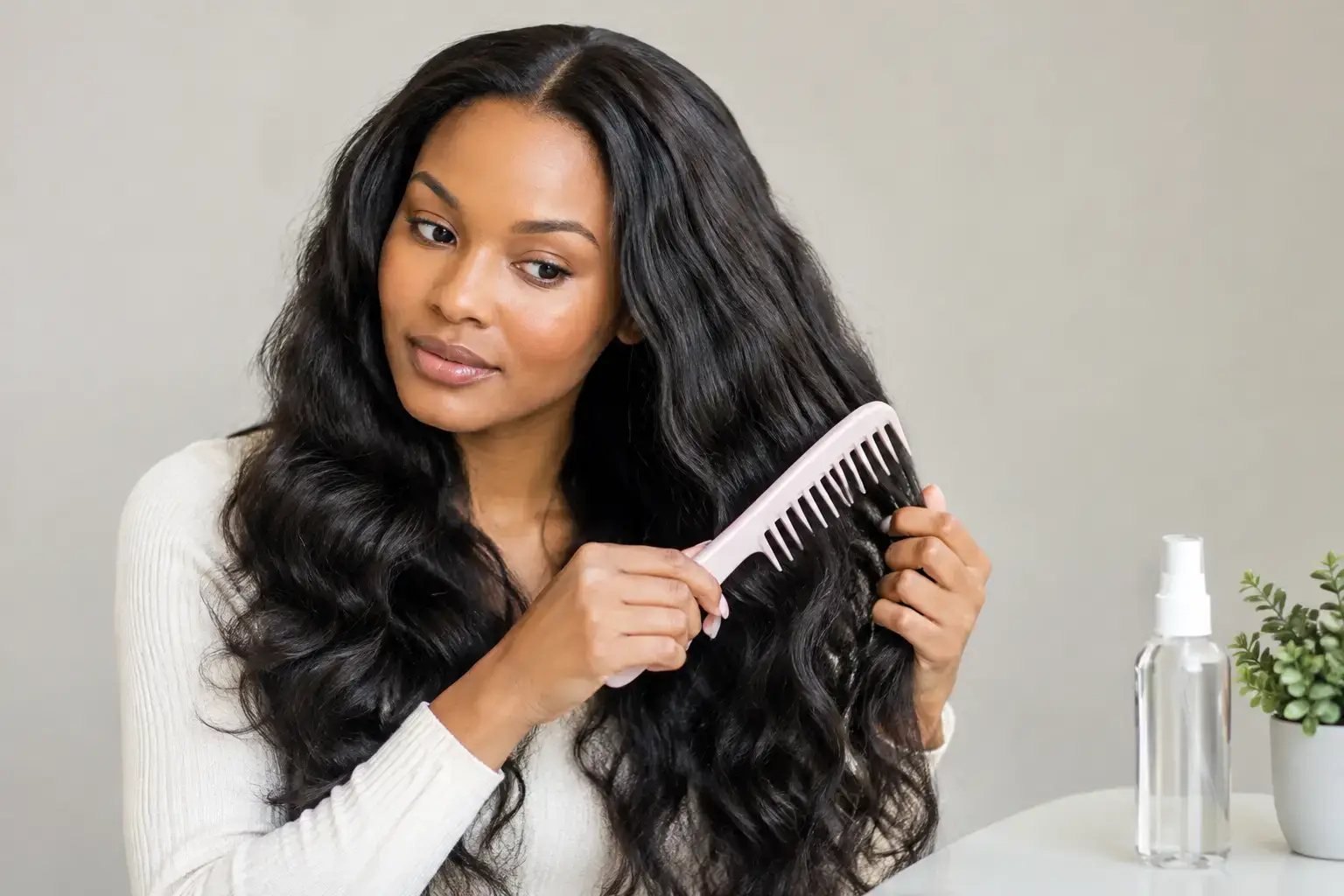
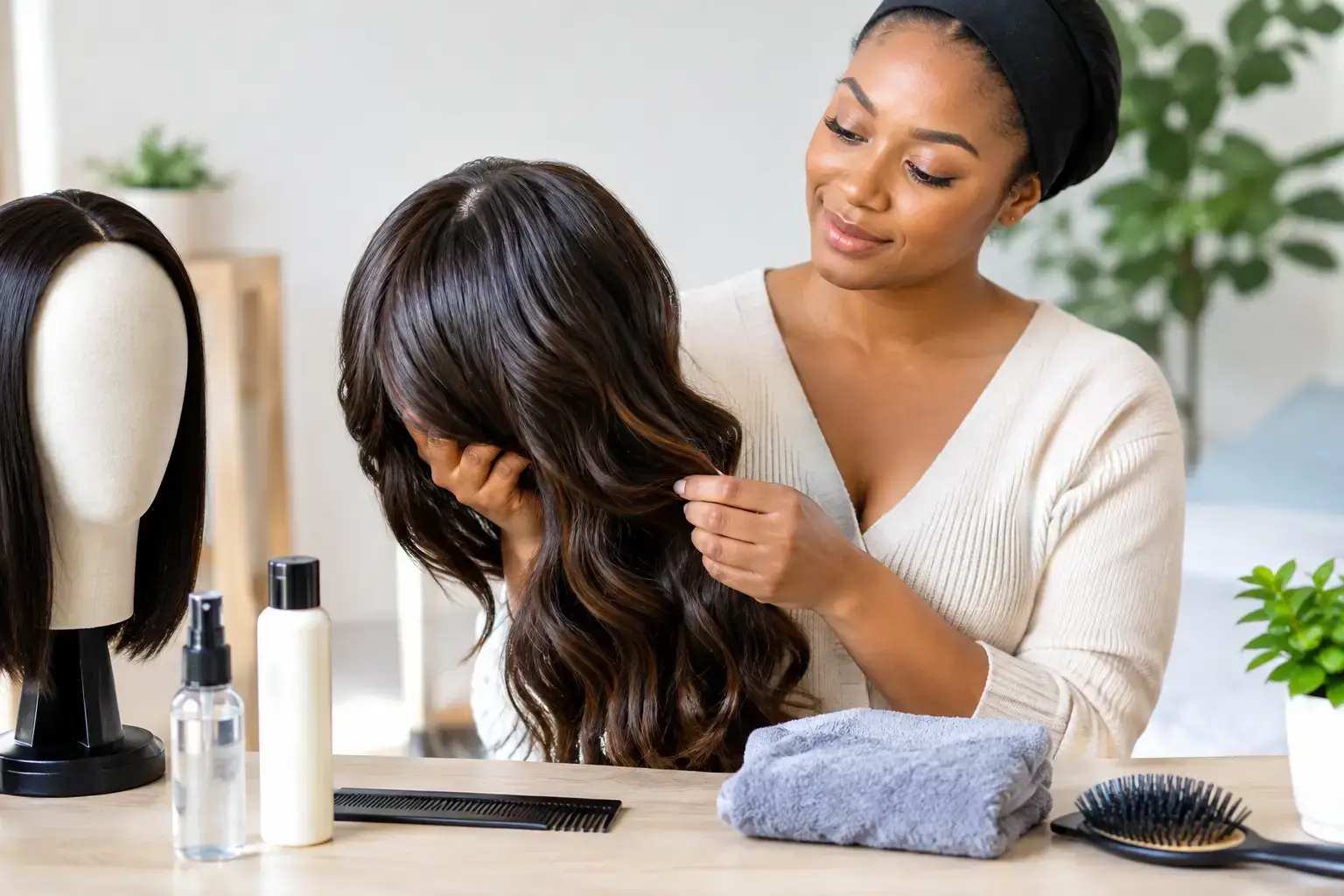
Place the wig on a stand if possible. Start at the ends and work upward in small sections using a wide-tooth comb, a wig brush, or your fingers. For curly styles, finger-detangling is often the safest choice because brushing can separate the curl pattern and create more volume.
If you find a stubborn knot, hold the hair above the tangle to avoid tugging on the cap. Work through it gradually rather than forcing a brush through. This step matters because smoothing spray and serum work best when they can coat the hair evenly instead of sitting on tangled sections.
For a human hair wig, apply a small amount of lightweight leave-in conditioner, smoothing serum, or anti-frizz spray from mid-length to ends. Avoid putting heavy oils near the roots or cap, where buildup can make the hair look flat and affect the wig’s clean feel. A little product goes a long way, especially on fine-density wigs.
For a synthetic wig, choose a product specifically made for synthetic fibers. A synthetic wig conditioning spray can reduce static and make the hair easier to comb without leaving a greasy coating. Standard hair oils, heavy creams, and conventional conditioners can weigh synthetic fibers down or leave residue that attracts more dust and tangles.
Mist lightly, then smooth the hair with your hands or comb it through gently. If the wig still looks frizzy, resist the urge to keep layering product. Too much product often turns soft frizz into stiff, dull buildup.
A human hair wig can usually be blow-dried or styled with a flat iron or curling iron after applying heat protectant. Keep the temperature moderate, use small sections, and avoid repeatedly passing a hot tool over the same area. If your goal is simply to reduce frizz, a low-heat blow-dry with a brush may be enough.
Heat-friendly synthetic wigs can be refreshed with low heat only, following the manufacturer’s instructions. A steamer is often a gentler option for relaxing fuzzy ends and restoring a smoother shape. Keep the wig on a stand, work slowly, and use your hands or a heat-safe comb to guide the fibers as you steam.
Do not use a curling iron, flat iron, hot water, or high-heat blow dryer on a standard synthetic wig unless its care instructions specifically allow it. The fibers can melt, kink, or become permanently rough. When you are unsure, test a small hidden section first or have a wig professional assess it.
Frizz is often most noticeable at the ends, particularly on longer wigs and styles that brush against the shoulders. Human hair wig ends may need a small trim when they are dry, split, or overly thin. A professional trim can make the entire wig look healthier without changing the style you love.
Synthetic ends cannot be repaired in the same way as human hair, but they can sometimes be carefully smoothed with steam or refreshed through professional styling. If the ends are badly matted, brittle, or visibly melted, trimming or reconstruction may be the better solution.
Over-washing can make both types of wigs harder to manage. A wig does not need to be washed after every wear. The right schedule depends on how often you wear it, how much styling product you use, your activity level, and whether you wear it in humid weather.
When it is time to wash, use cool to lukewarm water and products formulated for the fiber type. For synthetic wigs, gently immerse the wig rather than rubbing or twisting it. Rinse carefully, apply a synthetic-safe conditioning product if needed, and allow it to air-dry on a stand.
For human hair wigs, shampoo gently in a downward motion and follow with a moisturizing conditioner. Rinse thoroughly, blot with a towel, and let the wig air-dry partially before heat styling. Never wring the hair dry, as twisting roughens the cuticle and encourages more frizz.
The easiest way to manage frizz is to reduce the causes before they build up. Store your wig on a stand or in a breathable box away from direct sunlight, heat, and humidity. A wig left loose in a drawer can rub against other items and develop tangles before you wear it again.
Pay attention to the nape area after each wear, especially with long wigs. A quick, gentle detangle and a light mist of the correct conditioning spray can prevent small knots from turning into a matted section. If you wear scarves, high collars, or textured sweaters often, choose smoother fabrics around the neckline when possible.
For curly wigs, avoid brushing once the style is dry unless the look is meant to be brushed out. Refresh curls by lightly misting with water or a fiber-safe spray, then reshaping small sections with your fingers. For straight wigs, comb downward with light tension and keep styling products minimal.
At-home care can handle mild dryness, static, and everyday tangling. However, professional help is the safer choice when the wig has severe matting, a damaged lace front, thinning areas, loose combs or clips, stretched elastic, or frizz that returns immediately after styling.
A professional wig service can include washing, conditioning, restyling, trimming, steam treatment, cap repair, and hardware replacement. For a human hair wig, color correction or a conditioning treatment may be part of the solution. For synthetic hair, careful fiber restoration and reshaping can often extend the life of a favorite piece.
Hair A La Mode provides wig repair and maintenance services for both synthetic and human hair wigs, with personalized guidance on the safest way to restore your style. This can be especially reassuring when the wig is custom-made, medically necessary, or simply too valuable to experiment on at home.
A little frizz does not mean your wig has reached the end of its life. Treat it gently, use products made for its fibers, and give it professional attention when the issue goes beyond a simple refresh. Your wig should feel comfortable, look natural, and support the confidence you want to carry into every room.
Get practical synthetic wig care tips for washing, detangling, storing, and heat styling so your wig stays comfortable, polished, and natural-looking, too.

Protective style trends favor lighter tension, flexible wear, and natural finishes. Find a comfortable look that supports hair health and daily confidence.

Get hair coloring guidance for rich, natural-looking results, from shade selection and gray coverage to gentle care for wigs, extensions, and your hair.
