

Find the best protective hairstyles for your texture, lifestyle, and comfort, with practical care tips for braids, wigs, twists, and low-tension looks.


A loose weft can make an otherwise beautiful wig feel unreliable. You may notice hair lifting at the nape, a track shifting when you brush, extra shedding, or a small bump that was not there before. Learning how to repair loose wig wefts can protect the shape, comfort, and natural movement of your wig before a minor issue becomes a larger repair.
The best repair depends on where the weft has lifted, how the wig was constructed, and whether the hair is human hair or synthetic. A machine-sewn weft along the inside of a cap is often manageable with careful stitching. A hand-tied top, lace area, or heavily worn cap needs a much gentler approach. The goal is not simply to make the weft stay put. It is to secure it without creating tension, bulk, or a visible ridge.
Before reaching for a needle, turn the wig inside out and inspect the entire track. Look for a broken thread, a section where the stitching has loosened, a tear in the cap material, or a weft that has begun to unravel. Gently hold the surrounding cap fabric rather than pulling the hair itself. Pulling on the hair can worsen shedding and make it harder to see the original construction.
A loose weft at the nape often comes from repeated friction against collars, clothing, or the back of a chair. Wefts near the ear tabs may loosen when a wig is stretched over a head that is larger than the cap size or when clips and combs pull on the same area. If the cap is thinning, torn, or distorted, sewing the track back down may only be a temporary fix. The cap needs to be stable enough to hold the stitches.
Also check whether the wig is fitting too tightly. If it leaves pressure marks, lifts at the perimeter, or feels uncomfortable after a short time, the tension may be what caused the track to release. A repair that ignores fit can fail again quickly.
For a straightforward repair on a standard wefted cap, use a curved wig needle, strong polyester or nylon thread that closely matches the cap, small sharp scissors, and clips to keep nearby hair out of the way. A curved needle is easier to maneuver inside the cap and helps you avoid catching large sections of hair.
Avoid regular household thread when possible. It can break with wear, especially on a wig cap that flexes every time you put it on. Choose thread that is strong without being thick. Heavy thread may create a hard, noticeable line under the hair.
If you have a synthetic wig, keep it away from hot tools while working. Heat can change the fiber pattern or damage the hair. For human-hair wigs, you can lightly detangle and smooth the area first, but do not saturate the cap with water or styling products before sewing. A dry, clean surface gives you more control.
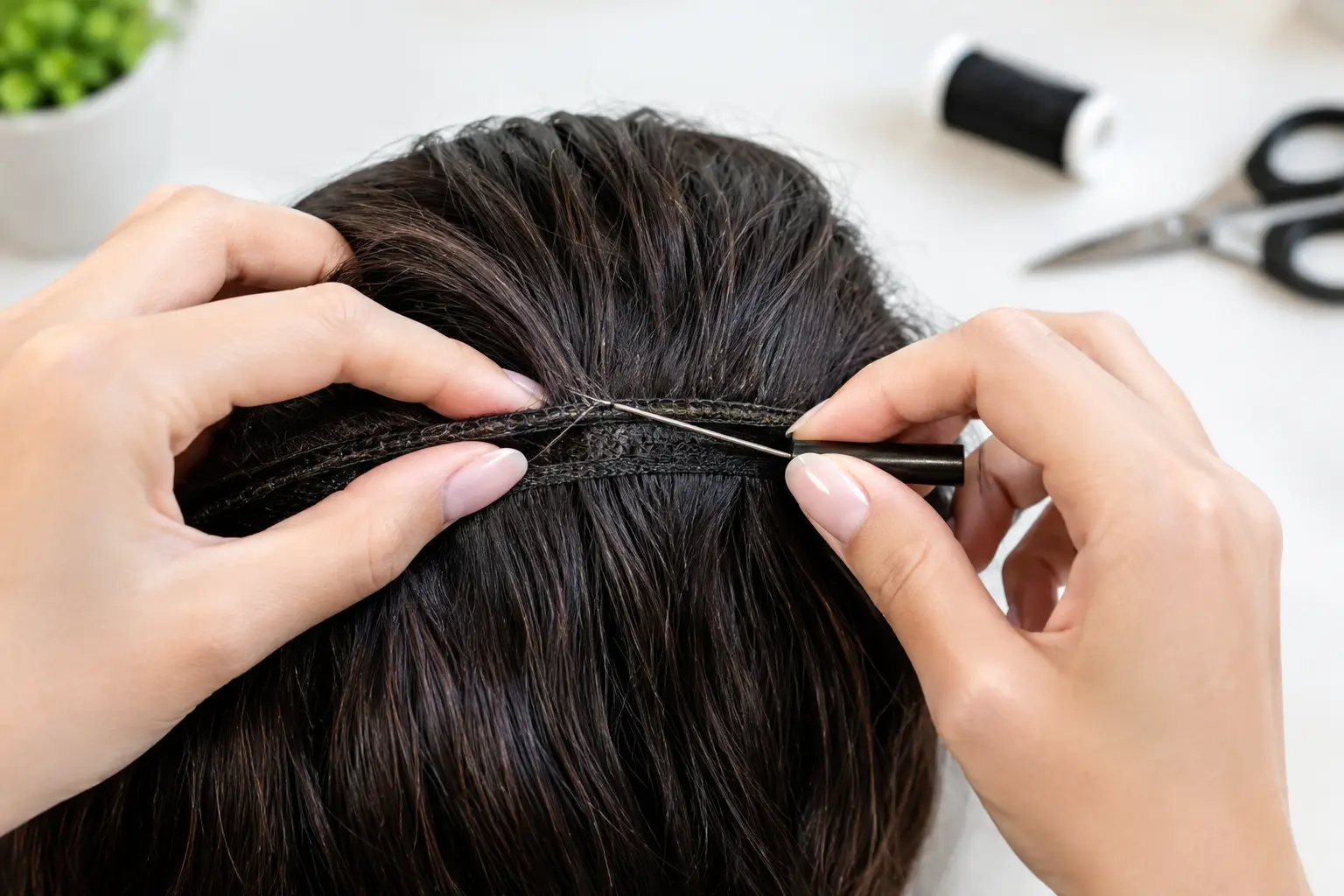
Start by laying the wig inside out on a clean, stable surface. Clip the hair away from the loose area so the stitches do not catch stray strands. Position the weft exactly where it originally sat. If only one end has lifted, align that end with the existing track rather than pulling it farther to make it reach.
Thread the curved needle and tie a small, secure knot at the end. Begin about a quarter inch before the loose section, stitching through the cap and the reinforced edge of the weft. This gives the repair an anchor in an area that is still secure. Make small stitches, spaced closely enough to hold the weft flat but not so tightly that the cap puckers.
Continue along the loosened section, keeping the weft flush with the cap. Your stitches should catch the weft band, not the hair above it. If hair gets caught in the stitching, carefully release it before moving forward. Trapped hair can create pulling, breakage, and an unnatural bump when the wig is worn.
When you reach the end of the loose area, continue stitching another quarter inch into the secure section. Knot the thread on the inside of the cap, then make one additional knot for reassurance. Trim the excess thread close to the knot without cutting the cap or the track.
Turn the wig right side out and gently comb the repaired section. Put it on or place it on a mannequin head to check that the track lies smoothly. A successful repair should feel secure, but it should not make the cap stiff or change the way the hair falls.
Sometimes the cap is fine, but the weft itself is fraying at one end. If the weft band has started to unravel, secure the end with a few tight stitches before attaching it back to the cap. Do not cut off more hair than necessary. Cutting too close to the track can cause additional shedding and leave the row shorter than intended.
If a long section of weft is loose or the track has separated in several places, avoid trying to pull it taut across the cap. That can create uncomfortable tension and make the wig look sparse in one area. It is usually better to have the track professionally reset or replaced.
Not every loose track is a home project. Lace-front wigs, hand-tied wigs, silk tops, mono tops, and wigs with delicate stretch caps require specialized techniques. These constructions are designed for realistic scalp appearance and natural movement, but the materials can be damaged by the wrong needle, thread, or stitch placement.
Professional repair is also the better choice if the cap is torn, the hair has shed heavily from one row, or the loose weft is close to the crown or part line. Those areas are highly visible, and even a small ridge can affect the finished style. A repair specialist can reinforce weak cap material, reattach or replace tracks, repair lace, replace clips and combs, or assess whether the cap needs more extensive work.
At Hair A La Mode, wig repair can be approached as part of the full picture: how the cap fits, how the hair is styled, where friction is occurring, and what will help the wig feel comfortable again. That matters when your wig is part of your everyday confidence, not just an occasional accessory.
A few care habits can make a meaningful difference. Brush your wig from the ends upward, supporting the hair near the roots so you are not tugging at the tracks. Store it on a wig stand or in a clean box when it is dry, rather than leaving it under clothing or loose in a drawer where the hair and cap can become stressed.
Wash only as often as the wig needs, using products suited to the fiber type. Product buildup can make hair harder to detangle, while overly frequent washing can dry out both human hair and synthetic fibers. Let the wig dry fully before storing it. Moisture trapped in the cap can weaken certain materials and leave the wig with an unpleasant odor.
Be mindful of adhesives, clips, wig grips, and tight adjustment straps. These accessories can be helpful, especially when you want added security, but they should not force the cap into a shape it was not designed to hold. If you need to tighten the straps to their maximum setting or rely on heavy adhesive every day, a fit adjustment may be more comfortable than more tension.
A loose weft does not mean your wig is beyond saving. Address it early, use small and careful stitches when the cap is stable, and let a professional handle delicate construction or larger damage. Your wig should support your style with ease, so a good repair is one you can wear comfortably and forget about.
Find the best protective hairstyles for your texture, lifestyle, and comfort, with practical care tips for braids, wigs, twists, and low-tension looks.

Learn how to remove wig adhesive gently, protect your skin and hairline, and clean your lace wig for a comfortable, confident next wear at...

Do wigs cause headaches? Learn how fit, pressure, heat, and styling affect comfort, with practical ways to wear your wig pain-free every day with...
